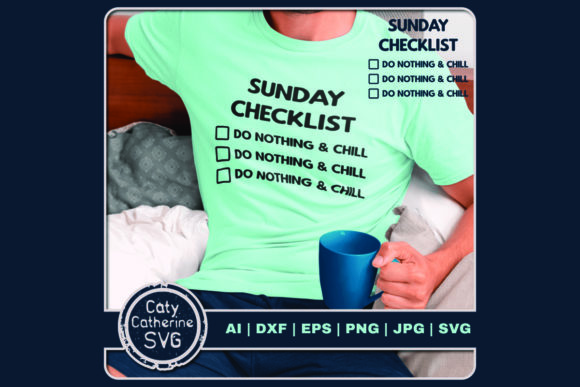
Sunday Checklist Do Nothing Chill Embroidery Review
As a designer who spends half my life staring at stitch density charts and the other half trying to sell handmade goods, I don’t just look for "pretty" designs. I look for viability. When I pulled up Sunday Checklist Do Nothing Chill, designed by Caty Catherine, my first thought wasn't about the cute font—it was about how this would translate from a digital file into a tangible, high-quality embroidered product. In the world of crafts and graphics, especially within the niche of machine embroidery design, there is a fine line between a charming concept and a stitching nightmare. After evaluating this embroidery file for potential use in real-world scenarios, here is my honest take on its practical value, aesthetic appeal, and commercial potential.
First Impressions: Mood and Visual Personality
The title itself sets a specific tone: relaxed, intentional, and slightly rebellious against the hustle culture that dominates so many craft businesses. Visually, the layout feels clean and modern. For an embroidery project to succeed, it needs to hold its own visually when stitched. This design relies heavily on typography and perhaps simple graphical elements to convey the "do nothing" message. The visual personality is unmistakably cozy. It doesn’t scream for attention; it invites the viewer to pause. This makes it an excellent candidate for personalized gift items where the sentiment matters more than complex imagery.
From a design asset perspective, the balance of negative space is crucial. If the text is too cramped or the decorative accents are overly intricate, the design loses its "chill" vibe and starts looking cluttered. Based on the preview, the spacing appears open, which is a green flag for stability during the digitizing process. A well-spaced machine embroidery design reduces thread breaks and keeps the fabric flat, ensuring the finished product looks professional rather than puffy or distorted.
Real-World Application: Where Does This Fit?
I spent some time mentally mapping out where Sunday Checklist Do Nothing Chill would shine brightest in a small business inventory. It isn’t a one-size-fits-all solution, but it has strong homes in specific categories of custom apparel and home decor.
- Tote Bag Design: This is perhaps the strongest use case. Imagine a sturdy canvas tote bag with this phrase embroidered on the front pocket. The contrast of the structured bag against the relaxed message creates a compelling narrative for buyers. It’s perfect for the Etsy seller looking to capture the "slow living" demographic.
- Sweatshirt Embroidery: Heavier fabrics like cotton fleece or French terry provide a stable base for embroidery. Placing this design on the chest or back of a sweatshirt taps into the comfort-wear trend. The design’s simplicity ensures it won’t get lost in the texture of the fabric, maintaining clarity even after multiple washes.
- Baby Embroidery: There is a growing market for gender-neutral, sentiment-driven baby gifts. This phrase works beautifully on burp cloths, muslin blankets, or onesies. Parents love gifts that acknowledge their need for rest. As a handmade product, this item carries high emotional value, allowing for premium pricing.
- Kitchen Towels and Aprons: While less common for quotes, a subtle embroidery on a tea towel or a linen apron adds a touch of humor to the kitchen. It fits well in boutique branding for shops that sell lifestyle accessories.
Technical Considerations and Stitch Performance
Transitioning from screen to hoop requires careful planning. The success of any digital embroidery file hinges on stitch density and underlay. Since this design likely features text, the digitizer must ensure that the satin stitch edges are tight enough to prevent fabric show-through but loose enough to avoid puckering.
If the design includes fill stitches for background elements, the stitch density must be appropriate for the fabric weight. On thin fabrics, dense fills can cause distortion. On stretchy knits, a proper stabilizer is non-negotiable. I always advise testing the embroidery file on scrap fabric before committing to a final piece. This allows you to check thread color contrast and inspect small details that might get lost in the stitching process.
One critical note: if the design contains tiny lettering or delicate decorative accents, be cautious with smaller hoop sizes. Fine details can merge together if the resolution is too low or the thread is too thick. Always review the design in black and white mockups to ensure legibility. If the text becomes unreadable when stripped of color, it will likely struggle in monochrome thread combinations as well.
Fabric and Stabilizer Strategy
The choice of fabric dramatically affects the final look. For embroidered patch applications or caps, a denser weave is preferable to support the tension of the threads. Textured fabrics, such as bouclé or heavy tweed, may obscure the finer lines of the design. In these cases, a cut-away stabilizer is recommended to maintain structural integrity over time.
When working with dark fabric, selecting the right thread colors is vital. High-contrast threads (like white or light gold on black) tend to pop more effectively than low-contrast combinations. However, for a "chill" aesthetic, muted tones or tonal stitching can create a sophisticated, subtle effect that appeals to a more mature audience.
Commercial Viability and Brand Consistency
For the Etsy seller or craft business owner, the question isn't just "can I make this?" but "will people buy this?" Sunday Checklist Do Nothing Chill aligns perfectly with current trends toward mental wellness and self-care. Products that validate the customer's desire for rest resonate deeply. This design supports brand consistency by offering a versatile visual that can be adapted across various products—from apparel decorators creating matching sets to makers producing holiday gifts.
However, commercial success depends on execution. The presentation matters. Using printable mockup tools to showcase the design on realistic backgrounds helps customers visualize the finished product. Ensure your listings highlight the quality of the embroidery, not just the graphic. Mentioning the care instructions—such as washing inside out to preserve the running stitch and fill stitch integrity—builds trust and reduces returns.
Final Verdict: A Smart Addition to Your Library
Overall, Sunday Checklist Do Nothing Chill is a thoughtful, well-balanced design that translates well to embroidery. It avoids the pitfalls of over-complication while delivering a clear, relatable message. It is particularly strong for small shop product lines focusing on lifestyle, relaxation, and personalized gifting.
Before incorporating this into your production workflow, remember to confirm licensing terms for commercial use. Verify the available formats—SVG, PNG, EPS, DXF, and JPG—to ensure compatibility with your digitizing software. Test the design thoroughly, paying close attention to stabilizer selection and thread choices. When executed correctly, this design has the potential to become a staple in your collection, appealing to buyers who appreciate both style and substance in their handmade products.
In a market saturated with generic quotes, Sunday Checklist Do Nothing Chill stands out by embracing simplicity. It’s a reminder that sometimes, the best design is the one that lets the message breathe. For designers seeking a reliable, commercially viable asset that balances aesthetic charm with technical feasibility, this is a solid choice.